|

Day in the Life
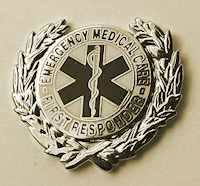 Emergency medical technicians (EMTs) and paramedics care for the sick or injured in emergency medical settings. People’s lives often depend on the quick reaction and competent care provided by these workers. EMTs and paramedics respond to emergency calls, performing medical services and transporting patients to medical facilities. Emergency medical technicians (EMTs) and paramedics care for the sick or injured in emergency medical settings. People’s lives often depend on the quick reaction and competent care provided by these workers. EMTs and paramedics respond to emergency calls, performing medical services and transporting patients to medical facilities.
They work both indoors and out, in all types of weather. They are
required to do considerable kneeling, bending, and heavy lifting. These
workers risk noise-induced hearing loss from sirens and back injuries from
lifting patients. In addition, EMTs and paramedics may be exposed to
diseases such as hepatitis-B and AIDS, as well as violence from mentally
unstable patients. The work is not only physically strenuous but can be
stressful, sometimes involving life-or-death situations and suffering
patients. Nonetheless, many people find the work exciting and challenging
and enjoy the opportunity to help others.
EMTs and paramedics employed by fire departments work about
50 hours a week. Those employed by hospitals frequently work between 45 and
60 hours a week, and those in private ambulance services, between 45 and 50
hours. Some of these workers, especially those in police and fire
departments, are on call for extended periods. Because emergency services
function 24 hours a day, EMTs and paramedics have irregular working hours.
When transporting a patient in an ambulance, one EMT or paramedic may drive the ambulance while another monitors the patient's vital signs and gives additional care. Some paramedics work as part of a helicopter's or an airplane's flight crew to transport critically ill or injured patients to a hospital. EMTs and paramedics also transport patients from one medical facility to another. Some patients may need to be transferred to a hospital that specializes in treating their particular injury or illness or to a facility that provides long-term care, such as a nursing home.
EMTs and paramedics should be emotionally stable, have good
dexterity, agility, and physical coordination, and be able to lift and
carry heavy loads. They also need good eyesight (corrective lenses may be
used) with accurate color vision.
Paramedics can become supervisors, operations managers,
administrative directors, or executive directors of emergency services.
Some EMTs and paramedics become instructors, dispatchers, or physician
assistants; others move into sales or marketing of emergency medical
equipment. A number of people become EMTs and paramedics to test their
interest in health care before training as registered nurses, physicians,
or other health workers.
Note: Some resources in this section are provided by the US
Department of Labor, Bureau of Labor
Statistics.
|